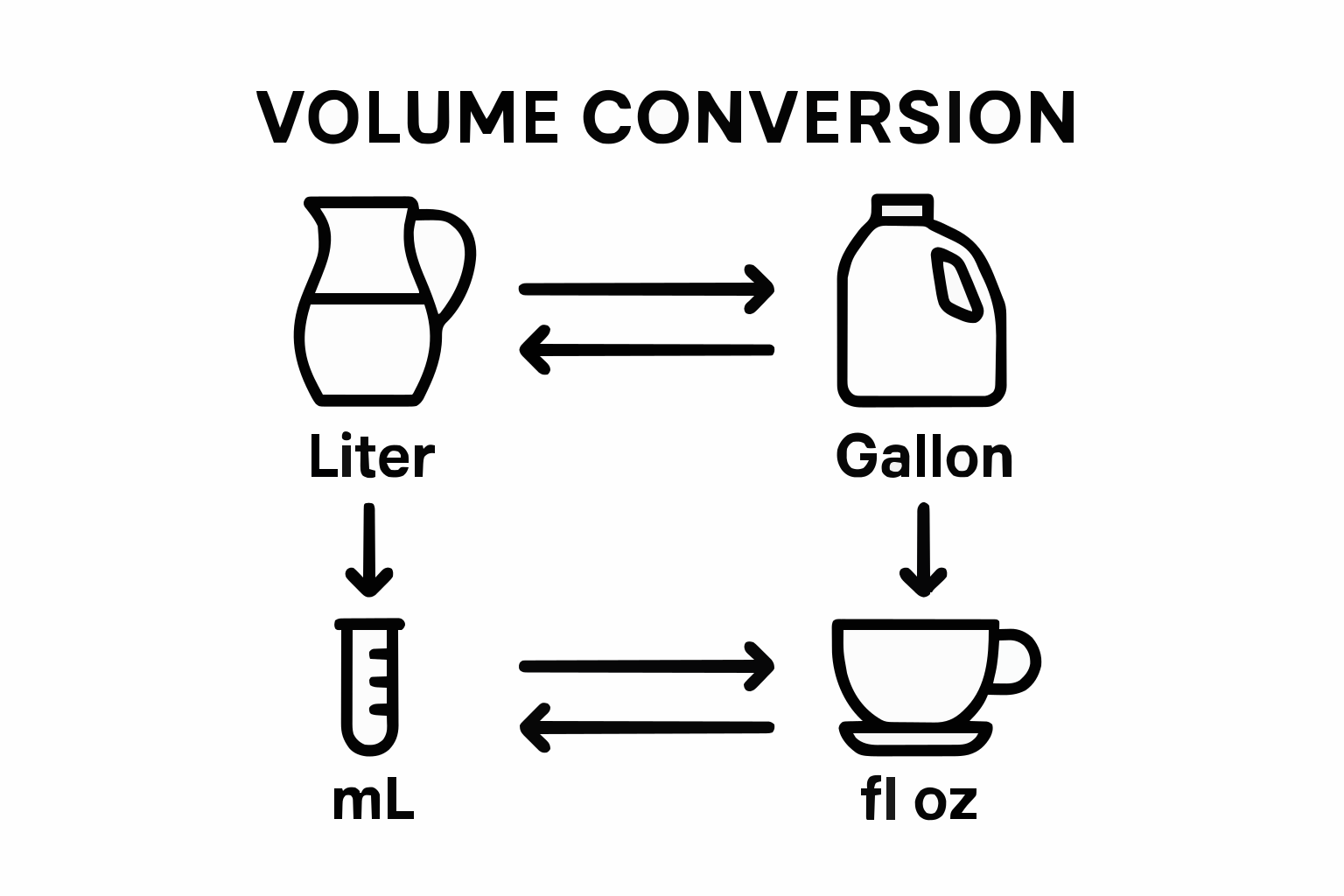
Volume is one of the most important measurements used in daily life, science, engineering, chemistry, cooking, construction, and even digital media. Whether you are converting liters to milliliters, gallons to liters, teaspoons to cups, or changing weight into volume, having an accurate and simple tool makes everything easier. This is why a Volume Converter is extremely helpful. It allows you to convert one unit of volume into another instantly without needing to remember any formulas. A volume converter is useful for students, professionals, cooks, lab technicians, engineers, and even everyday people who want quick conversions for home use.
People search for volume converter, liquid volume converter, mass to volume converter, volume converter to liters, volume converter calculator, weight to volume converter, kg to volume converter and volume converter chart because units vary a lot between fields. For example, cooking uses cups, tablespoons and teaspoons. Science uses cubic meters, liters and milliliters. Construction uses cubic feet and cubic inches. The healthcare sector uses milliliters and liters. Different countries use different systems. This variety is the main reason why a simple converter becomes so important.
A volume converter also helps when you are working with liquids or solids with specific density. For example, converting weight to volume requires understanding density. If one kilogram of water equals one liter, one kilogram of oil will not equal one liter because oil is less dense. Tools like weight to volume converter or mass to volume converter help solve this instantly. This entire blog explains everything in a simple human tone so you can understand volume conversion easily.
Volume conversion is required in many places. A cook might want to convert cups to milliliters. A chemistry student may need to convert liters to cubic centimeters. A builder may want to convert cement quantity in cubic feet. A health professional may measure fluids in milliliters. A trader transferring liquids may need gallons to liters. Even audio engineers use digital volume conversion tools when they search for high volume converter or mp3 high volume converter online to increase sound levels.
Without a proper converter, these tasks become confusing. Manual calculations often lead to mistakes. A volume converter gives you the correct value instantly so that your work becomes easier, faster and more accurate. Whether you are measuring liquids, powders, grains, chemicals or even fuel, this tool gives you accurate results with just one click.
A volume converter follows a simple mathematical principle. Every unit of volume has a relationship with another unit. The converter stores these relations and applies them instantly when you select the units. For example:
1 liter = 1000 ml 1 gallon = 3.785 liters 1 cubic meter = 1000 liters 1 teaspoon = 5 ml 1 tablespoon = 15 ml 1 cup = 240 ml
When you enter a value, the converter instantly applies the correct conversion factor and gives you the result. People who search for volume converter calculator or volume converter to liters want exactly this kind of simple and instant tool.
Here is a simple chart showing common volume units and their relationships:
| Unit | Equivalent Volume |
| 1 Liter | 1000 Milliliters |
| 1 Gallon | 3.785 Liters |
| 1 Cup | 240 Milliliters |
| 1 Tablespoon | 15 Milliliters |
| 1 Teaspoon | 5 Milliliters |
A liquid volume converter is extremely useful when handling cooking, chemistry, medical measurements, drinking water, beverages, oils and other liquids. Liquids flow and take the shape of the container, so their volume is always measured, not weight. When someone searches for liquid volume converter, they want to convert gallons to liters, ml to liters, cups to ml, or even tablespoons to teaspoons. These units are used globally in kitchens, labs, industries and pharmacies.
500 ml = 0.5 liter 2 liters = 2000 ml 1 gallon = 3.785 liters 300 ml = 1.25 cups
Weight and volume are not the same, but sometimes people want to convert between the two. This is where weight to volume converter becomes useful. Weight depends on mass, while volume depends on space. The key factor that connects them is density. Water has a density of one gram per milliliter, which means one liter of water equals one kilogram. But other substances are different.
For example:
1 kg of oil ≠ 1 liter 1 kg of honey ≠ 1 liter 1 kg of flour ≠ 1 liter
This is why mass to volume converter or kg to volume converter tools exist. They use density values to give accurate measurements. These converters are used in cooking, chemistry labs, oil industries, food processing units and scientific measurements.
| Material | 1 kg Equals | Reason |
| Water | 1 Liter | Density = 1 |
| Oil | ~1.1 Liter | Lower density than water |
| Honey | ~0.7 Liter | Higher density |
| Flour | ~1.5 Liters | Lightweight particles |
Liters are one of the most common volume units worldwide. People searching for volume converter to liters want quick conversions such as gallons to liters, ml to liters, cups to liters or cubic feet to liters. Almost every field, from grocery shopping to fuel stations, uses liters for measurement. This converter helps you instantly convert any unit into liters without manual calculation.
1 gallon = 3.785 liters 250 ml = 0.25 liters 0.5 cubic feet = 14.15 liters
A volume converter chart helps you visualize conversions easily. Here is a simple chart showing common conversions:
| Unit | Equivalent Value |
| 1 ml | 0.001 Liter |
| 1 Cup | 240 ml |
| 1 Gallon | 3.785 Liters |
| 1 Cubic Meter | 1000 Liters |
| 1 Cubic Foot | 28.31 Liters |
A high volume converter is used in industries where liquid or gas is measured in large quantities. This includes water treatment plants, fuel stations, dairy industries, breweries and chemical production units. In large-scale conversions, units like cubic meters, gallons, barrels and liters are commonly used. A high volume converter helps convert large quantities accurately.
Some users search for low volume to high volume converter because they want to increase the sound or audio levels of their media files. This is a completely different type of volume conversion related to sound levels, not liquid or physical measurement. Audio conversion tools such as mp3 high volume converter online are used to increase the loudness of MP3 files.
Although sound volume is different from liquid volume, people often search for both under the same phrase. This blog covers both so users understand all forms of volume conversion.
An mp3 high volume converter is used to increase the audio volume of songs, recordings or voice files. These tools boost the amplitude of audio waves to make sound louder. This type of converter is used by content creators, video editors, and podcast makers. Many users search for mp3 high volume converter online when their audio recordings sound too soft and need enhancement.
If a recipe says one cup of milk, that equals 240 ml. If you need half a cup, that becomes 120 ml. A volume converter helps you quickly adjust any recipe.
One gallon equals 3.785 liters. If you want to fill ten gallons of fuel, it becomes 37.85 liters. This is useful when converting US gallons to Indian fuel units.
A scientist might need 25 ml of chemical which equals 0.025 liters. The converter ensures accurate lab measurements.
One cubic foot equals 28.31 liters. This helps construction workers measure sand, cement or concrete accurately.
A volume converter converts one unit of volume into another instantly. It uses stored conversion factors to give accurate results.
Yes, but you need density. Water is easiest because one liter equals one kilogram. Other materials require density values.
Liters, ml, gallons, cubic feet, cubic meters, teaspoons, tablespoons, cups and many more.
Liquids use direct volume units, while solids sometimes require density-based conversion.